Consent-Driven Segmentation and CRM Campaign Lift
Putting consent first in segmentation builds smaller, cleaner audiences that convert better.
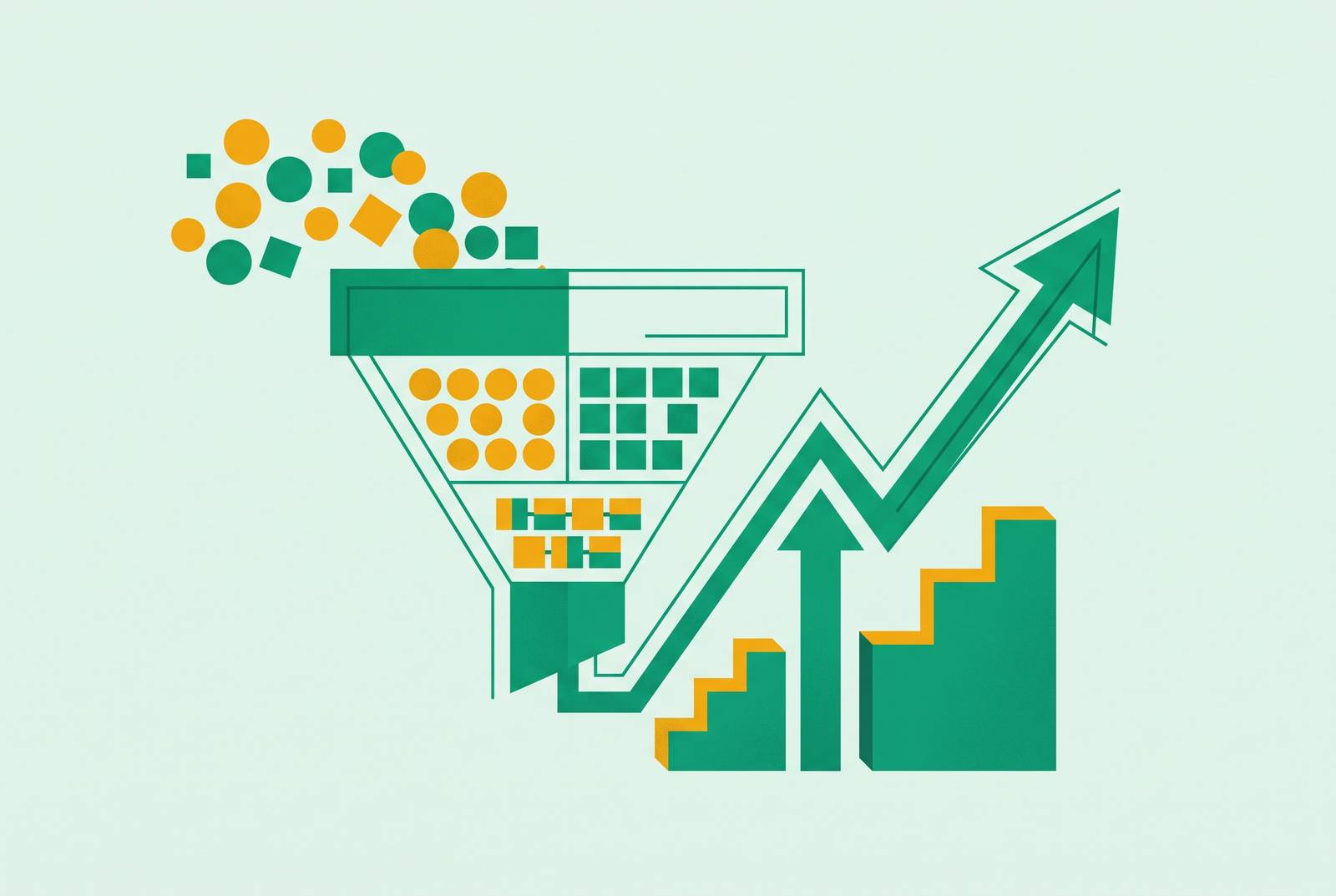
Consent data used to sit at the end of the CRM pipeline, a final scrub before send. Flipping that order makes the audience on the other side smaller, cleaner, and higher-converting. Suppression filtering and consent-first segmentation can produce lists of the exact same size and still perform nothing alike, and that gap is what this piece walks through.
The regulatory environment that made consent-first segmentation a competitive necessity, not just a legal obligation
Start with the money, because that's where most CRM teams start paying attention. The CMS GDPR Enforcement Tracker recorded roughly €2.1 billion in GDPR fines in 2023 alone, with a single violation costing one company €1.2 billion. Cumulative penalties since 2018 have crossed €6 billion. GDPR caps exposure at 4% of global annual revenue or €20 million, whichever hurts more, and Washington state now carries $500-per-recipient exposure for something as small as a misleading subject line. That penalty scales with list size, so one sloppy send on a six-figure list turns into a finance problem overnight instead of staying a marketing mistake.
California just raised the bar again. The Delete Request and Opt-out Platform, DROP, launches January 1, 2026, and lets a consumer file one deletion request that reaches every registered data broker at once. Brokers have to start processing those requests by August 1, 2026. Any company still keeping consent data in disconnected silos, ESP here, CRM there, now carries a compliance cost tied directly to that fragmentation, and DROP is what makes the cost visible instead of theoretical.
Marketers already feel the squeeze. DesignRush's Email Marketing Benchmark Survey found 81% say privacy rules have changed how they collect opt-ins, and just 14% report no impact. Cisco's privacy research found 95% of customers say they won't buy from a company that mishandles their data. Enforcement risk and customer sentiment are pulling the same direction now, and that's what turns consent data from an afterthought into infrastructure.
How the data hierarchy shifted from third-party to zero-party and first-party signals
Third-party data was already dying before regulators showed up. Roughly 75% of brands planned to cut back or drop it entirely by 2026, and by the end of that year, more than 70% of digital ad spend is expected to run on first-party strategies instead.
First-party data is what a customer does on a brand's own turf: purchases, clicks, logins, cart activity. It answers what happened. It has nothing to say about why.
Zero-party data closes that gap. Forrester coined the term for data a customer "intentionally and proactively shares," things like a preference center selection, a stated purchase intention, a quiz answer. The act of sharing it is the consent itself. No inference step, no compliance gap to patch later, no guessing at intent from behavior.
That's the reason zero-party data is the fastest-growing category inside customer data platforms right now, expanding at around a 36.8% compound annual rate according to Statista and the MarketsandMarkets CDP Market Report. Research has found 91% of consumers are more likely to buy from brands that act on preferences they've actually stated, and separately, A significant share of enterprises raised investment in first-party data infrastructure through 2024 and 2025.
They treat zero-party and first-party data as a compliance upgrade, something bolted on to reduce risk. It's actually a targeting upgrade first. When these signals replace third-party inputs, the resulting segment arrives already consent-filtered, and the quality win and the compliance win happen in the same motion. That's the whole case for building this way from day one instead of patching consent in after the fact.
What consent-based segmentation inputs look like inside a CRM or CDP
Consent breaks down into attributes: by channel, by purpose, by topic, opted in or opted out on each one. A contact might take product update emails but not promotions, SMS but not push. Every one of those is a queryable field, sitting in the record next to a purchase date or a loyalty tier, no different in kind.
Microsoft Dynamics 365 Customer Insights, in its updated release, builds this straight into segment construction. Marketers get "Will send" and "Will not send" indicators that update automatically to match the enforcement model, and they pick compliance profiles, purposes, channels, and topics at the point of building the segment, not after it's already gone out the door. Segment membership stays lined up with policy because it's built that way from the first step, not patched in once someone notices a gap.
That ordering changes everything downstream. When consent rules live inside the segment definition itself, there's no suppression list to run later and no reconciliation step to sweat over before launch. The audience is correct the moment it's built, not correct after cleanup.
DigitalApplied's 2026 framework lays out a layered segmentation stack: transactional data (RFM scoring) at the base, a behavioral overlay on top, then demographic or firmographic context, then predictive scoring at the very top. Consent belongs at the base layer, because it decides who's even eligible to be scored by every layer stacked above it. Get that order backwards, and every layer above ends up built on contacts who never should have been in the pool.
CDPs make this workable at scale, since they pull behavioral, transactional, and declared data into one persistent profile and push consent state across channels close to real time. The weak point sits in the CRM-to-CDP gap. Wherever that connection hasn't been built out properly, consent signals get lost somewhere in the handoff.
Preference centers do double duty here. A contact who checks "product updates only" isn't just trimming a mailing list, they're self-segmenting into a group that's tighter and consented at the same time, by their own hand. None of this holds still, either: consent changes the moment someone opts out, opts back in, or narrows a preference, and a segment that doesn't move with it carries the same risk as a behavioral segment nobody's refreshed in months.
Why consent-signal audiences outperform suppression-filtered audiences of the same nominal size
A list of 100,000 contacts suppressed down to 80,000 by pulling non-consented records at the end still carries the statistical fingerprint of the full 100,000. Those pulled contacts were shaping the segment's averages the entire time they sat in it, and removing them late just hides that distortion from whoever's reading the campaign report.
Building the segment from opted-in contacts only, from the start, changes the underlying math. People who actively said yes are, on average, people more willing to engage, a selection effect already working before any behavioral or demographic filter even applies. Consent also works as a rough proxy for how fresh the relationship is: a recent opt-in usually signals someone close to a decision, while consent that's old, or worse, inferred rather than given, usually signals someone who's checked out. Consent-first segments lean toward the fresher group automatically, without anyone engineering that outcome on purpose.
Deliverability is the mechanism that turns this into opens and clicks. Send only to people who opted in, and complaint rates drop while engagement climbs, and inbox providers notice that pattern and reward it with better placement. Inbox providers monitor complaint rates and reward better placement to senders who stay well under acceptable thresholds, and lists built on real consent tend to do that without anyone working to keep them there.
Segmentation research from DigitalApplied and LatentView found that roughly 20 to 30% of customers drive 70 to 80% of revenue. Consent-first segmentation gets to that high-value tier faster because it strips out the low-intent contacts that would otherwise water down the behavioral signal.
The campaign lift case: what the performance data shows when segmentation quality improves
Start with the baseline. Segmented email campaigns generate 30% more opens and 50% more click-throughs than non-segmented ones, a figure reported by InboxAlly.
A bigger number floats around too, the often-cited 760% revenue lift from segmented campaigns, sourced to Campaign Monitor. DigitalApplied's 2026 analysis traces that figure back to a single study, so treat it as a directional "up to" rather than a number to build a forecast on. Cite it, don't lean on it.
Personalization only works when the data underneath is clean and consent-backed, and research shows what's actually on the table: lifting revenue 5 to 15% and boosting marketing ROI 10 to 30%. Klaviyo data, cited by InboxAlly, shows abandoned cart emails hitting around a 50% open rate on average, with top programs closer to 65%. None of that happens on a dirty list. Those numbers appear specifically when the pool underneath is opted in and the signal isn't muddied by disengaged contacts sitting in the mix.
Adoption still lags badly, and that gap is the real story here. Research suggests only a minority of businesses use even basic segmentation when sending email, while Litmus 2025 research found 78% of marketers name segmentation their single most effective tactic. Most effective and most practiced are not the same list. The space between them is lift sitting on the table, unclaimed, and the teams closing that gap are the ones building consent into the segment logic itself instead of treating it as a wall to route around.
Wiring consent signals into segment logic: operational steps from principle to practice
Start with an audit and be honest about what it turns up. Map where consent state currently lives: consent management platform, ESP, CRM, CDP, and find every place it stops propagating cleanly between them. Nothing downstream works until that map exists.
Stop treating consent as a single yes-or-no switch. Break it into channel (email, SMS, push), purpose (marketing, transactional, analytics), and topic (product updates, promotions, newsletters). Each one is its own segment filter, not one gate covering everything at once.
Build consent state into the base layer of the segmentation stack, not into a suppression step tacked on at the top. This is the single move that separates consent-first segmentation from the old consent-filtered habit, and skipping it means redoing everything else downstream later.
Connect preference center changes to segment membership dynamically. A contact who narrows their preferences should move between segments the moment that happens, not sit in a suppression queue waiting on the next scheduled list pull. Refresh cadences need to match how fast consent actually moves, and it moves fast: DigitalApplied's 2026 framework suggests monthly refresh for transactional segments, but consent-driven segments need a tighter clock, since opt-outs after a campaign or re-opt-ins after a preference update can shift a segment within days.
Preference centers, surveys, and quizzes are worth building well because they do two jobs in one interaction. They collect the stated preference data marketers want, and they generate the consent signal at the same time, so nothing extra has to happen to capture it.
CDPs handle consent propagation across channels better than standalone CRMs, because they hold one persistent, unified profile instead of scattered channel-specific records. The CRM-to-CDP integration layer is exactly where teams should look first when consent signals aren't syncing cleanly. California's DROP requirement turns fixing that layer into a forcing function rather than a nice-to-have: deletion requests have to process across every connected system, and that's simply not workable for an organization still keeping consent siloed by channel.
Consent-driven segmentation's place in governed, real-time audience management
The money backs up the shift. Mordor Intelligence values the consent management market in the low single-digit billions of dollars in 2026, growing at a 17.05% compound annual rate to roughly double that by 2031, while the adjacent CDP market is forecast to reach tens of billions of dollars by 2030. Investment at that scale means consent management has moved past compliance checkbox and into core marketing infrastructure, full stop.
Mordor Intelligence data shows retail and e-commerce already control 24.80% of the consent management market as of 2025: the industries running the heaviest segmentation operations are the same ones buying the most consent tooling.
Timing decides whether any of this holds up. A consent change that doesn't reach an active segment right away creates two problems at once, compliance exposure and audience quality decay, and neither one waits politely for the next scheduled sync. Consent-driven segmentation only works as well as its data stays current, not merely present somewhere in the system.
Doing this well takes something close to a registry: what data feeds each segment, what consent basis covers it, how it moves across systems. That's the same infrastructure that supports audit readiness and fast regulatory response, and it's also the foundation CRM teams will need as campaign execution shifts toward AI agents making segmentation and send decisions with less direct human review. Organizations building that governance into the data layer now are the ones who'll run agentic marketing with confidence later, instead of backfilling it under pressure once something breaks.
Consent as a segmentation input, not a filter bolted on at the end and not a checkbox, produces audiences that are smaller on purpose, higher-intent by construction, and defensible by design. That combination is what drives the lift, and it's not a one-time gain. The regulatory environment keeps tightening, third-party signal keeps eroding, and the gap between teams building on consent from the start and teams still suppressing at the end only gets wider from here.